

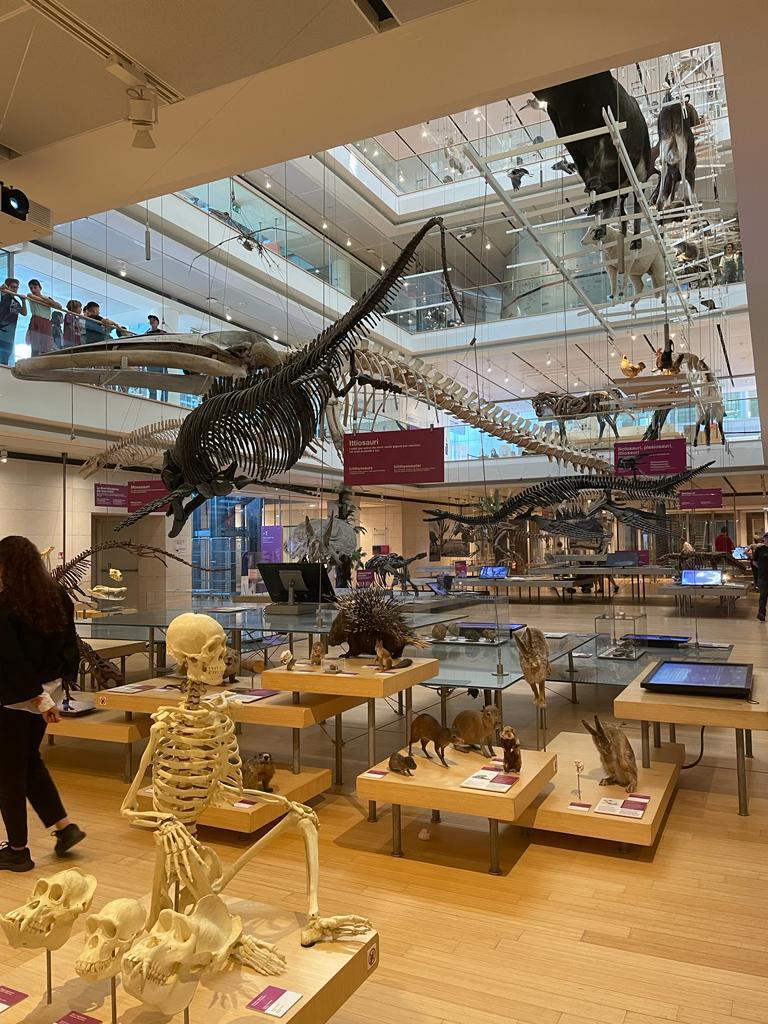
This project explored visitor perceptions of integrating social robots into museum environments. Through field observations, interviews, and a focus group, we gathered rich, qualitative data on the expectations, concerns, and potential applications of social robots in enhancing visitor experiences. With time our research question changed from: How do the interactions and engagement patterns of visitors differ when they are guided by social robots vs conventional information? to a more detailed one: How do visitors perceive the potential integration of social robots in museums, considering their expectations, concerns, and anticipated advantages, and how might these perceptions influence their engagement and experience within museum settings?
Timeline
1 semester, Qualitative Research course and Participatory Design Course. MSc HCI, University of Trento
Team
Group project
Role
Researcher -> observations, interviews, workshop facilitation, thematic analysis
Observations
We conducted 25 observations in 5 different museums, focusing on visitor engagement with exhibits and existing technologies. This gave us insight into how visitors navigate museum spaces and interact with information, which informed our understanding of where social robots could add value.
Interviews
Each team member conducted 2 semi-structured interviews (10 in total) with museum visitors to gather in-depth perspectives. The interviews explored visitor expectations for social robots, how they might enhance the museum experience, and any ethical concerns they had.
We focused on how robots could provide information, facilitate navigation, and complement human guides, while also probing concerns about technology in cultural spaces.
Focus Groups
The focus group brought participants together to discuss their views on the role of social robots in museums. This collective setting allowed for diverse opinions and dynamic interactions, helping us uncover both common expectations and contrasting views on how robots should be integrated.
Key Themes: Discussions centered around accessibility, personalization, and the ethical implications of using robots in a traditionally human-centered environment.
Coding & Thematic Analysis
After each step (Observations, interviews, focus groups) we conducted individual coding of the data based on the study’s objectives, allowing each team member to identify emerging patterns from the raw data. These patterns were then coded and organized into meaningful categories.
After identifying these categories, we developed overarching themes, refining them further by sub-categorizing the data to capture more nuanced insights.
As a group, we reviewed and refined our themes, comparing them to the patterns observed during the fieldwork. This iterative process allowed us to validate and align the emerging themes from the interviews with the themes discovered through our observations.
PD Workshop
With qualitative insights in hand, we ran a hands-on participatory design workshop to move from understanding perceptions to actively imagining solutions.
Participants (a mix of HCI and non-HCI students) worked through a series of structured activities: an icebreaker (Passion Tic-Tac-Toe) to build openness, a "Build a Bot" rapid prototyping exercise, and a scenario-building phase where they created personas and sketched robot-visitor interactions.
The workshop was designed to surface the reasoning and values behind ideas, what participants were willing to trade off, what they were uncomfortable with, and where technology felt like it belonged vs. where it felt intrusive.
Visitor Engagement:
The observations revealed that conventional methods in museums, such as static information panels and audio guides, were perceived as limited in creating engaging experiences. In contrast, interactive elements, including the potential for social robots, were seen as ways to enhance visitor engagement.
Perception of Social Robots:
Pros: Many participants were open to the concept of social robots, recognizing their potential to provide personalized tours, offer real-time information, and facilitate navigation in a more engaging way than traditional methods.
Cons: Some visitors expressed concerns that social robots might become a distraction or diminish the personal experience that museums typically offer, particularly when interacting with human guides or attendants.
Similarities and Differences:
Similarities: Both the interviews and the focus group highlighted a cautious attitude toward social robots, with participants noting that robots should not replace the human interaction that many visitors value in museum settings.
Differences: While interviews indicated a preference for prior knowledge and planning when visiting museums, the focus group discussions leaned toward exploring the potential for spontaneous interaction and discovery through social robots.
Key Insights:
Social robots have the potential to enhance the interactive experience in museums but should be carefully integrated to supplement rather than replace traditional museum elements. Visitors expect a balance between technology and the personal touch provided by museum staff. Participants suggested starting with smaller museums for the initial introduction of social robots, gradually scaling the implementation to larger and more popular museums once the technology proves successful in engaging visitors.
This was the project that taught me how much research method shapes what you find. The interviews gave us considered, individual perspectives. The focus group surfaced social dynamics and disagreements that no interview would have revealed. The participatory workshop unlocked imaginative thinking that pure observation never could. Using all three together gave us a much richer picture than any single method would have.
It also made me more careful about sampling: several participants were HCI students, which likely influenced how they imagined robots and what concerns they raised. That's a limitation, but recognising it mid-project shaped how we interpreted the data, which is itself a research skill.