


Context
Timewise is a mobile app designed to help young adults build healthier relationships with their screens. Developed as part of the Social Interaction course in the MSc Human-Computer Interaction program, this project explored how behavioral science and gamification can support self-regulation and wellbeing.
Duration
1 month
Team
7 teammates
Role
UX Researcher and Designer
Tools
Figma
Problem
Young adults find difficulties self-regulating screentime spent on online activities for personal entertainment.
Many people want to reduce their screentime but fail to accomplish their goal. How might we help them reduce screen time without making them feel restricted or judged?
Target Group
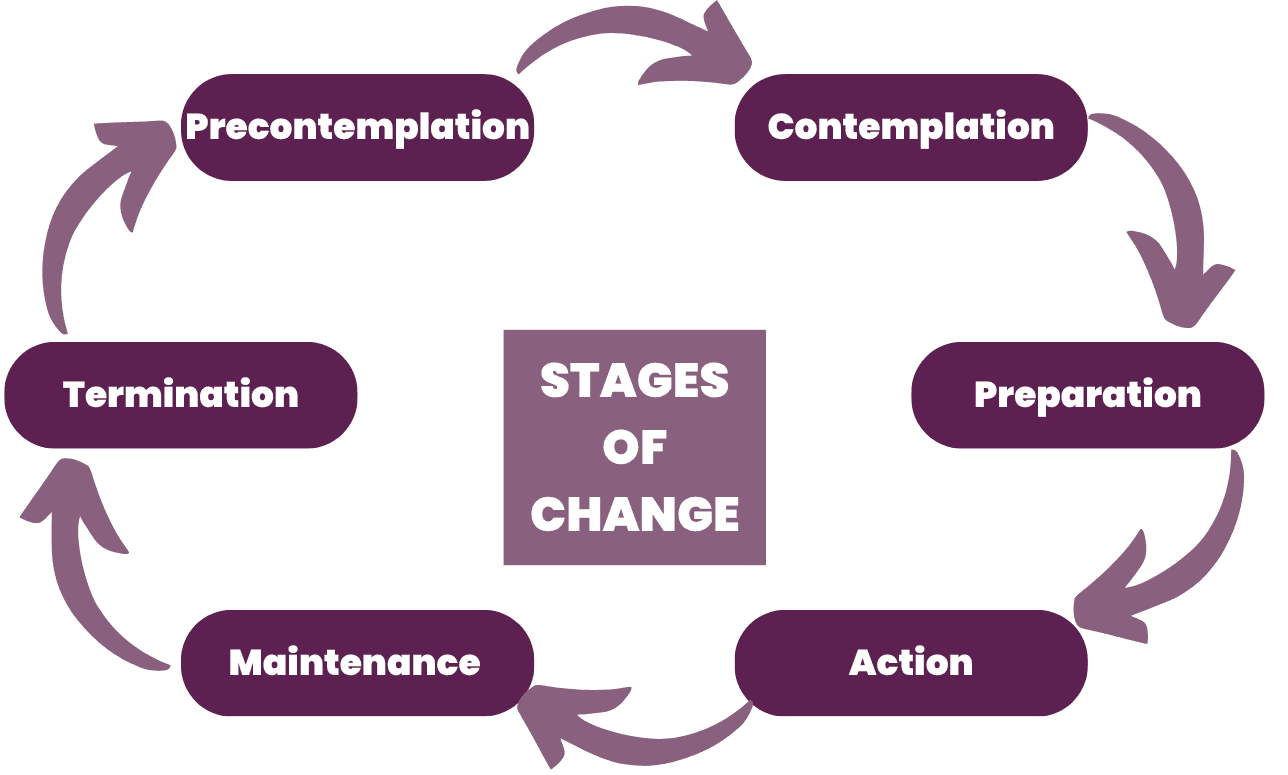
Individuals in the preparation, action, or maintenance stage.
Solution
Timewise, a mobile application designed to help adults between 18-30 years reduce their screen time through various techniques inspired by behavioral science and gamification.

Step 1: Choose a Plan
Sets a personal intention, not a hard limit
Activates intrinsic motivation from the start
User feels in control before anything begins
Step 2: Select Apps to Resign
The app provides the screentime on each app and user identifies their most distracting one
Naming the habit primes awareness before nudges activate
Only selected apps are affected, full autonomy preserved

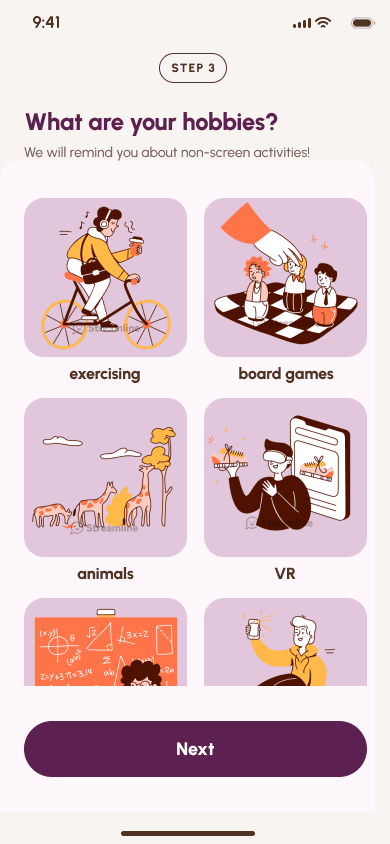
Step 3: Select Hobbies
User picks offline activities they genuinely enjoy
When immersion break triggers, one hobby is surfaced as an alternative
Step 4: Create Friction
Grayscale, app shuffling, and immersion breaks activate passively
No ongoing effort required from the user
The design works in the background, habit change without willpower

Research and Design Process
The first challenge was communicating the long-term impact of screen time in a way that felt tangible rather than abstract.


Feedback and Motivation
Dynamic Daily Challenges/ Streak Success System/ Leaderboard and Stages/ Interactive Progress Tracking/ Reward Points and Incentives.


Reminder Notifications
Reminders are especially effective in the beginning. Three Reminders to promote goal compliance since it is the tolerated amount by users.
This was my first UX project and looking back, I can see exactly what I'd do differently. The brief only asked us to identify and solve a social problem, we chose to go further and prototype a solution. That decision pushed me to translate research into real design decisions for the first time, and showed me how much harder and more rewarding it is to move from insight to interface.
I learned that behavioral science is a design tool, not just theory. Grounding every feature in a specific mechanism (nudge theory, bottom-up processing, autonomy preservation) gave our team a shared language for making decisions instead of arguing about personal preference.