
How can social robots be integrated into museum environments to create a more interactive and engaging experience for visitors? This project aimed to uncover possibilities and challenges, with a focus on personalizing museum experiences through robotics. Participants collaboratively envisioned potential applications, considering both the technical and social aspects of robot integration. Using hands-on activities, we encouraged participants to reflect on their expectations, concerns, and the advantages of these robots in a cultural setting.
Planning
We began by gathering a diverse group of participants, including HCI and non-HCI students, to ensure a range of perspectives on the use of social robots in museum settings. This allowed us to better understand how different backgrounds influenced perceptions, expectations, and concerns around integrating technology into cultural spaces.
Key Activities: To open the workshop, we conducted an icebreaker (Passion Tic-Tac-Toe) to foster connections between participants and identify shared values, which helped create an open and collaborative atmosphere.
Define
Insights from initial activities like "Build a Bot" and early discussions highlighted core participant needs: enhancing accessibility, providing real-time information, and improving museum navigation. Participants also raised ethical and practical concerns, such as the risk of over-reliance on technology and potential job displacement.
We distilled these into a clear design focus for the workshop: creating user-friendly, accessible, and engaging robots that add value to the museum experience without replacing human guides.
Ideate
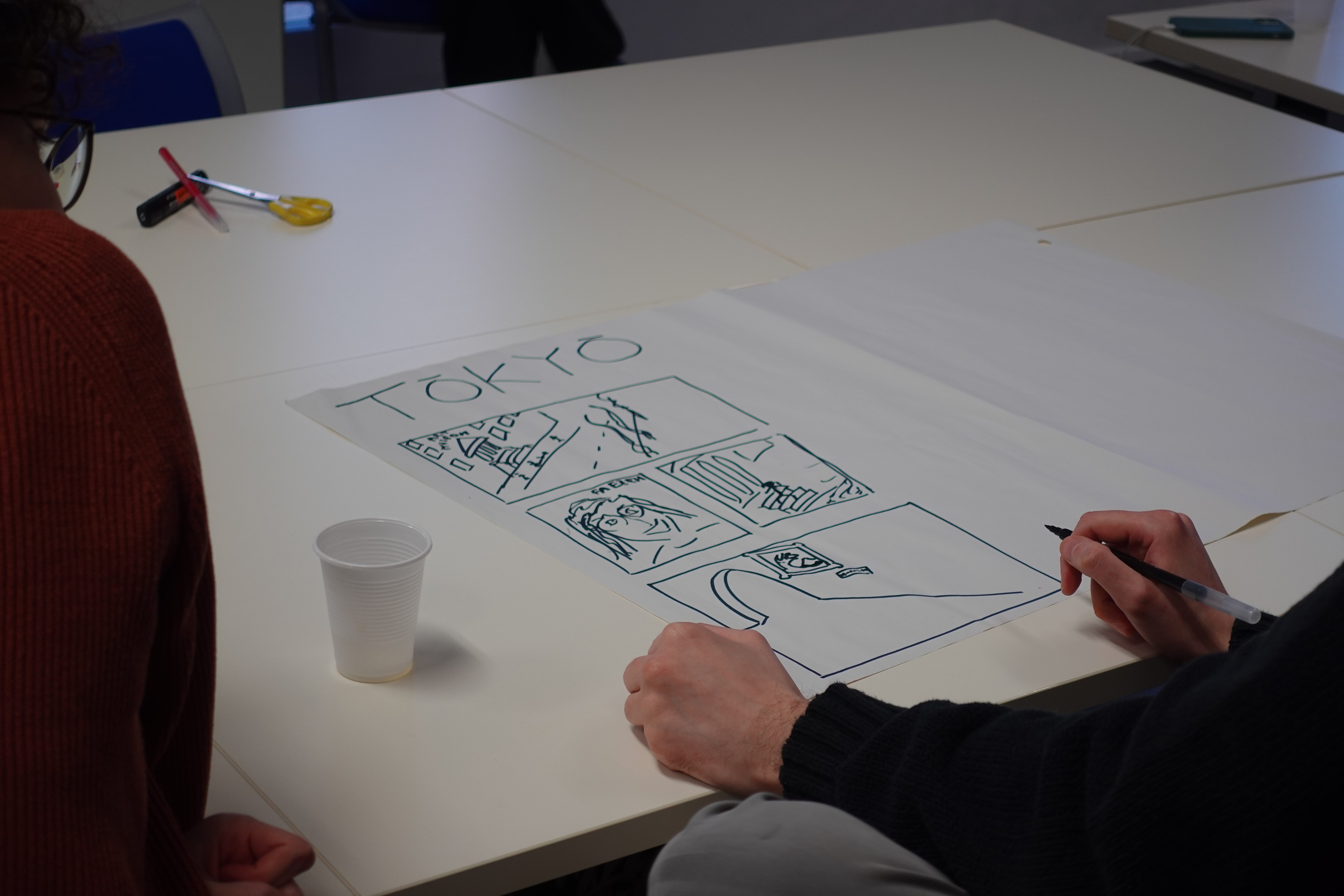
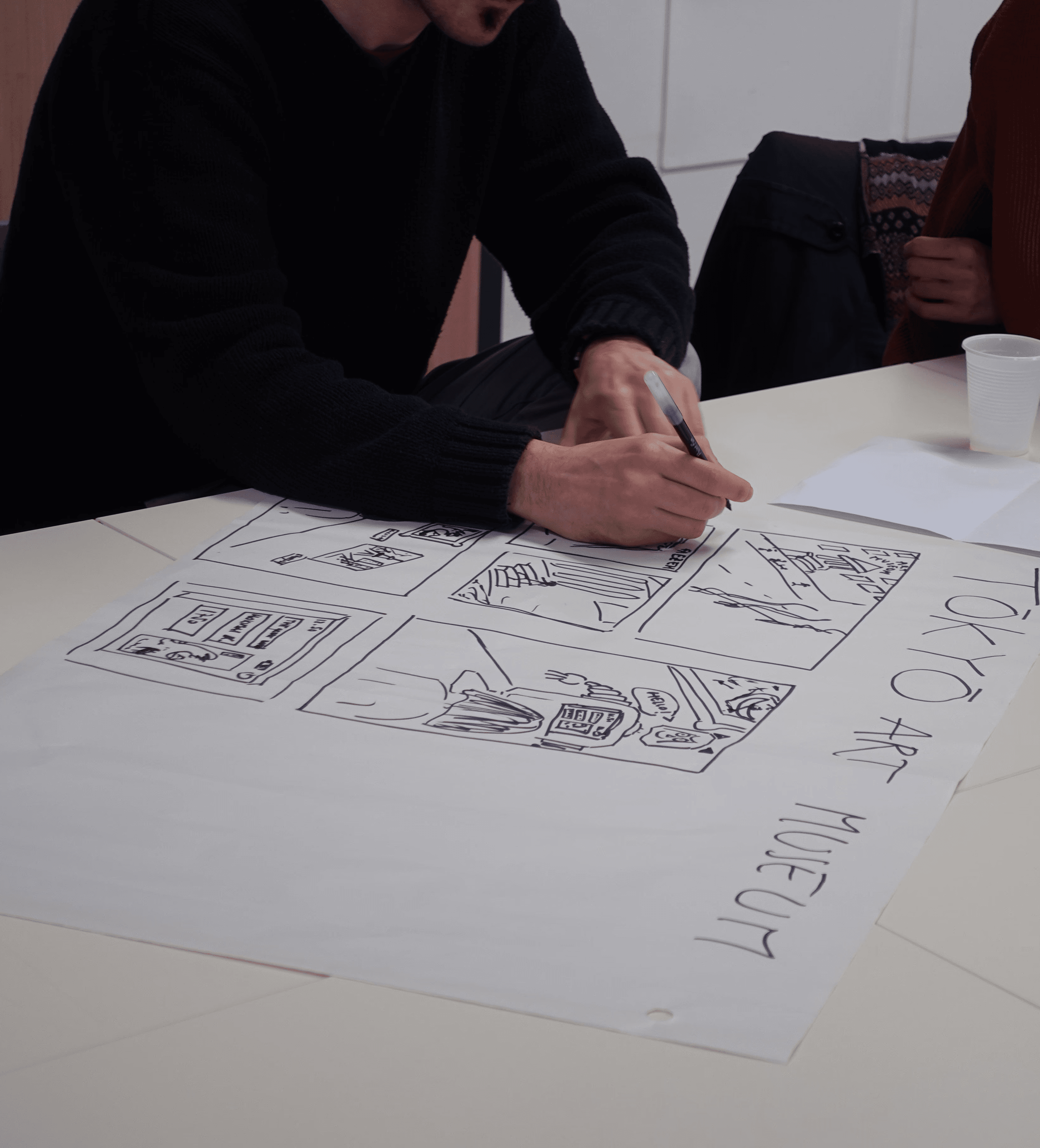
During the scenario-building phase, participants worked together to brainstorm how social robots could function in a museum environment. Ideas ranged from interactive tour guides to robots capable of personalizing experiences based on user input.
Key Activity: In the "Scenario Building" exercise, participants created personas and sketched out robot-visitor interactions, brainstorming both innovative and realistic applications.
Prototype
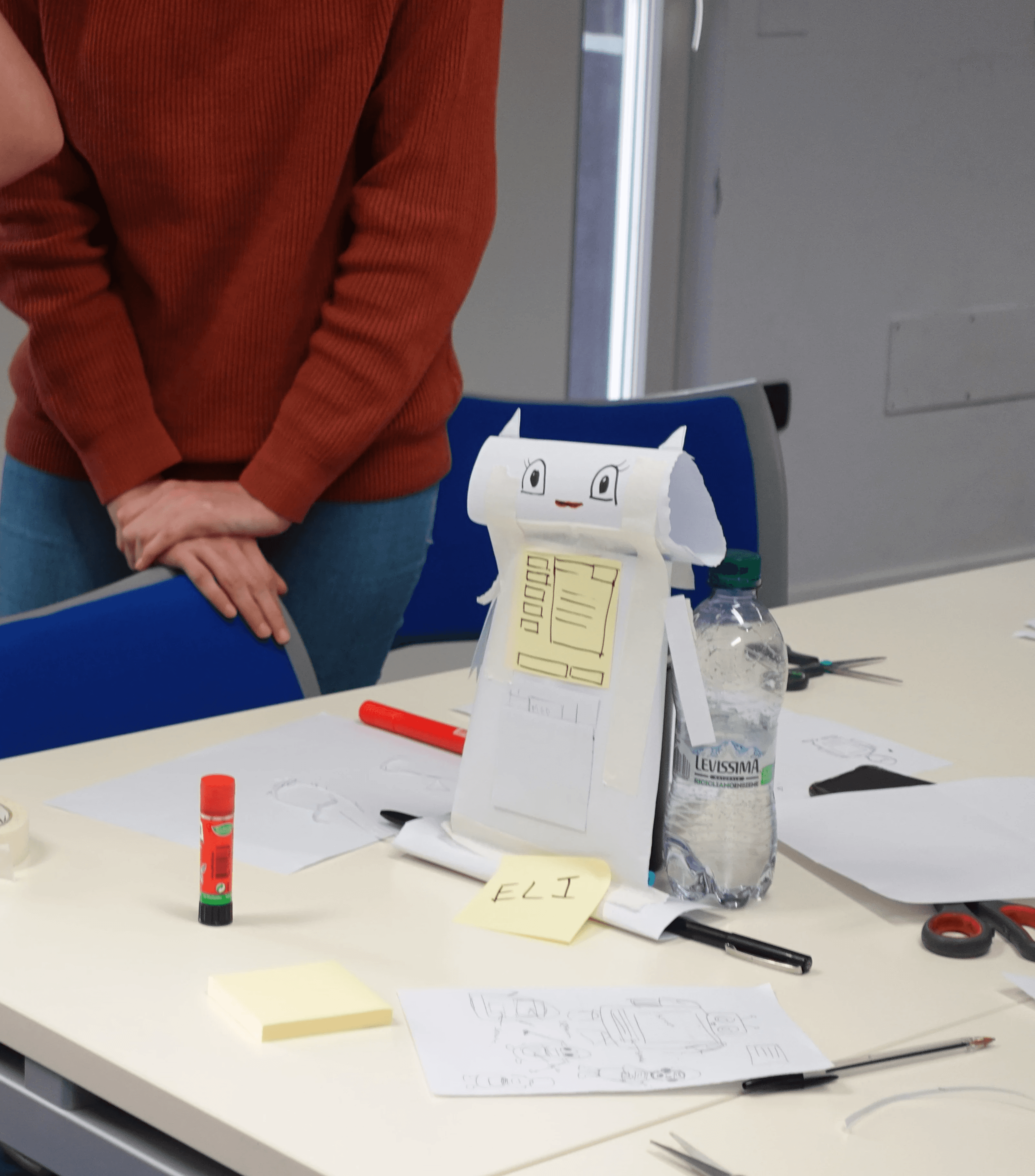
Using rapid prototyping, participants translated their ideas into physical or conceptual prototypes. These prototypes embodied the participants' vision of social robots that were engaging, informative, and tailored to the diverse needs of museum visitors.
Key Activity: "Build a Bot" allowed participants to experiment with design and functionality, exploring how the physical form of robots could affect user interaction and comfort.
Assess
After the workshop activities, participants reflected on how their perceptions of social robots had changed. Many acknowledged that their initial ideas evolved after engaging in collaborative design, and they recognized both the potential and challenges of integrating robots into museums.
Feedback: Participants provided constructive feedback on the practicality of the ideas generated, noting technical limitations and areas for improvement, such as robot-human interaction dynamics and the ethical implications of robot roles in cultural spaces.
Enhanced Engagement Through Interaction:
Participants saw the potential for social robots to increase visitor engagement by offering personalized tours, interactive learning experiences, and instant access to information about exhibits.
Creative Solutions:
Ideas included robots that could teleport visitors to different parts of the museum, act as friendly tour guides, or even perform educational skits with historical costumes and props to make learning more engaging.Challenges:
Concerns included the feasibility of certain features, such as teleportation, and the impact of pre-existing biases from participants familiar with HCI. Participants also noted that financial sponsorships would be necessary to make some ideas a reality.Diverse User Needs:
Personas were developed to highlight different user journeys, such as a high school teacher looking for dynamic ways to teach history. This helped envision how social robots could cater to various visitor demographics, enhancing inclusivity and accessibility.
Some participants were HCI students, and this may have impacted the reliability of the information obtained due to their potential biases.
The reduced number of participants has limited the quantity and variety of information obtained.
We did not collect the feedback from two participants as they left the workshop early.
Some participants had no prior knowledge of social robots, while others were more familiar with this topic. Therefore, it is possible that the former were limited in imagining social robots in a museum context and may have been influenced by the latter.
This project demonstrated the importance of collaborative design in envisioning new technologies. The workshop highlighted that user-centered design should consider both technical feasibility and visitor expectations. It also emphasized the value of iterative prototyping and testing in shaping innovative yet practical solutions for real-world settings.