

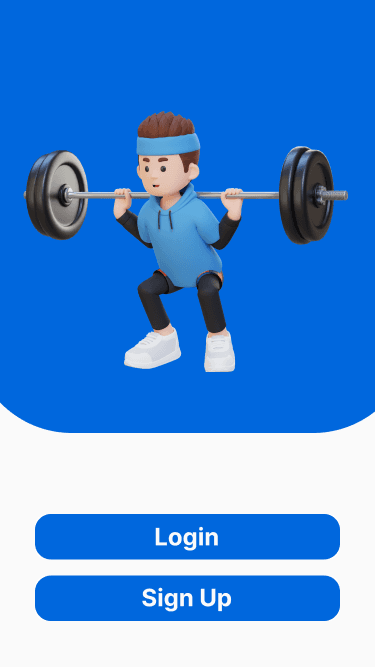
Train Out is a mobile app concept developed during the TechFit Challenge at the University of Barcelona (UAB). The project explored how existing campus infrastructure could be leveraged to seamlessly integrate physical activity into students’ daily routines through location-based interaction and gamification.
Duration
3 months
Team
HCI students
The Challenge
Many university students struggle to stay physically active due to time constraints and low motivation. The challenge was to design a solution that would lower the barrier to exercise by embedding it into everyday campus life, without requiring new facilities or complex setups.
Research and Brainstorming (Discover)
We explored student fitness habits and campus infrastructure, investigating how technology could increase engagement with existing workout stations and locations.
Selecting Useful Insights and Ideas (Define)
Key insights led us to focus on low-effort interactions, social motivation, and rewards. We defined a solution centered on QR-based location check-ins and shared progress.
Prototyping (Develop)
Started with low-fidelity prototypes and, through team discussions, selected key features to develop into a high-fidelity prototype alongside a physical QR code.
Final Presentation (Deliver)
Presented a static mockup, showcasing the app’s functionalities, user interface, and potential impact on student health and well-being.
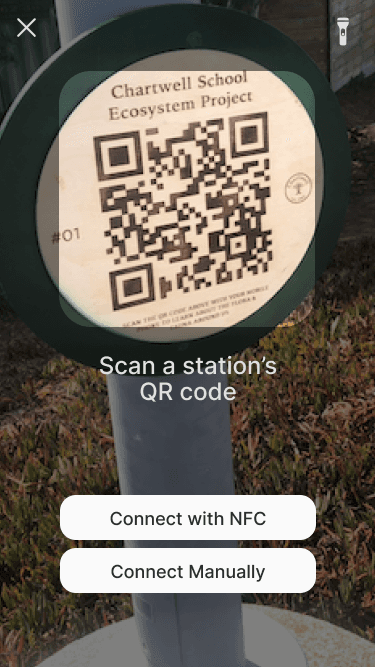
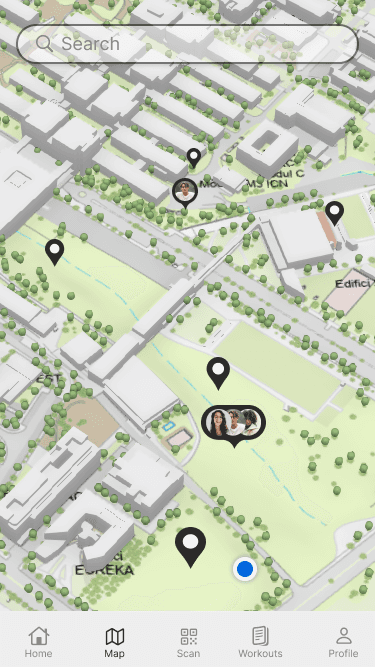
The "Train Out" app is designed to encourage students to engage in physical activities by connecting with workout stations and campus locations through QR codes. Key features include:
QR Code Interaction
Users scan QR codes placed at workout stations to log their activities and earn rewards.
User-Friendly Interface
Easy login with university credentials and intuitive navigation.
Social Features
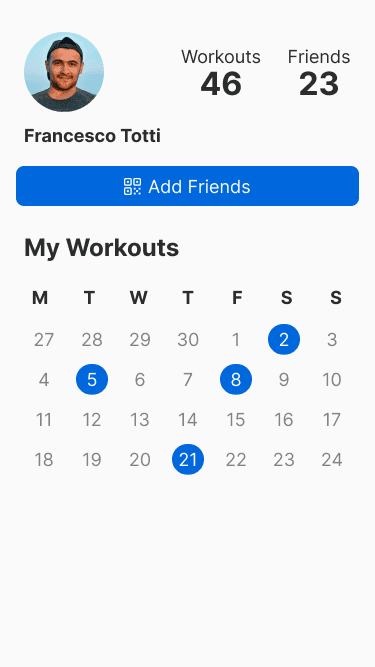
Ability to connect with friends, see their locations when connected to stations, and share progress.
Gamification
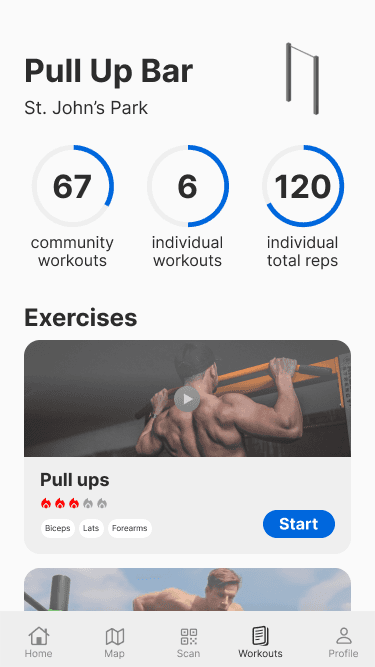
Levels to achieve and workouts to complete, making the exercise experience fun and motivating.
The project strengthened my experience in designing within real-world constraints, collaborating across disciplines, and balancing gamification with usability. Transitioning from remote collaboration to in-person teamwork during the final week highlighted the value of face-to-face design alignment and rapid iteration.
Importance of Cross-Disciplinary Collaboration
Challenges of Remote Work
User-Centered Design